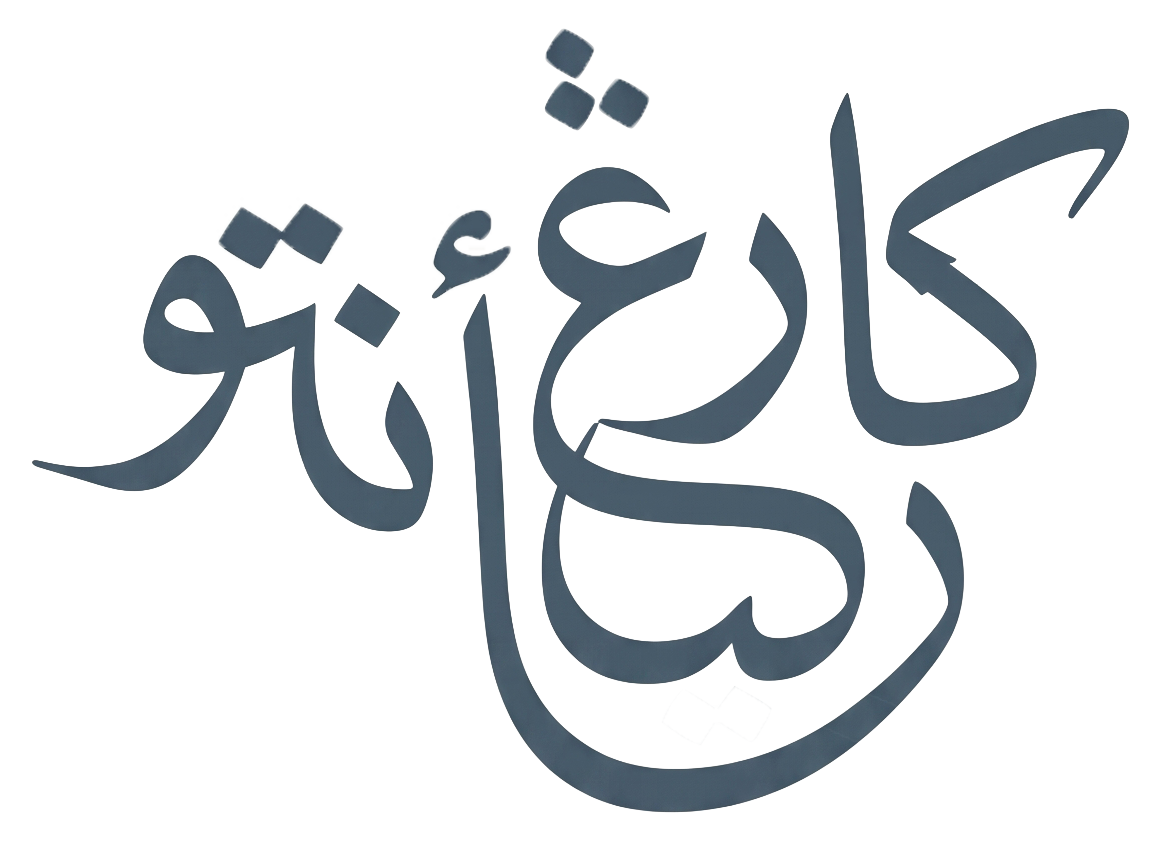
A payment receipt letter written on 1 November 1781 by Sultan Abulmafakhir Muhammad Aliuddin of Banten to Nicholas Mijboom, the Dutch VOC Commander in Banten. The document certifies that the Sultan received gold and silver payments (including riyal muda, riyal pasymat, and tangawan) totaling 50,916 riyal muda 41 tangawan (or 38,187 riyal pasymat 41 tangawan) for various goods and silver sent to Batavia by the Dutch East India Company (VOC). Written in black ink using vocalized Pegon script in Malay on the right side and Latin script in Dutch on the left side. The layout is straightforward without standard Malay Terasul letter elements (lacks header or stamp seal), but bears the Sultan's handwritten signature on the lower right margin. Uses Dutch-manufactured European paper from the late 17th–18th century.
A letter written on 6 Ramadhan 1093 H (March 1682) by Sultan Abul Fath Abdul Fattah (Sultan Ageng Tirtayasa) of Banten to King Charles II of England, delivered via Captain Ja Nikelsen (Jack Nicolson). The Sultan details ongoing hostilities with his rebellious son, who was aided by Dutch forces led by Captain Martin and Captain Jack in Surosowan. Sultan Tirtayasa reports that his troops successfully expelled enemy forces from Surosowan to Jakarta (Jaketra). Fearing a Dutch counter-siege from land and sea, the Sultan urgently requests weapons, cannons, and gunpowder from England. In exchange, Sultan Tirtayasa pledges to hand over the fortress of Jaketra/Jakarta to England if victory is achieved. The document specifies that communications be directed to Ponthang and Tanahara. Written in black ink using Arabic script in Arabic. Features a three-line Arabic heading Bismillāh ar-raḥmān ar-raḥīm... and an oval British Royal seal inscribed Her Majestys State Paper Office on the upper left margin. Includes a separate envelope leaf (f. 115) addressed to King Charles II.
A letter written on Monday, 13 Rabiulawal 1093 H (22 March 1682) from Sultan Abul Fath Abdul Fattah (Sultan Ageng Tirtayasa) of Banten to King Charles II of England. The letter recounts the internal conflict between Sultan Tirtayasa and his rebellious son, Abu an-Nasr (Sultan Haji). After Sultan Tirtayasa defeated his son, the Dutch (Walanda) intervened by sending 14 warships to assist Abu an-Nasr and attack Surosowan. Invoking the long-standing defense agreement between Banten and England against Dutch aggression, Sultan Tirtayasa urgently requests military assistance from England to defeat the Dutch. If victorious, Sultan Tirtayasa promises to grant Batavia/Jakarta to England. Delivered via Captain Thomas aboard the ship Eskimo Afrikan. Written in black ink using vocalized Arabic script in Arabic. Features a two-line Arabic heading reading Bismillāh ar-raḥmān ar-raḥīm. Al-ḥamdu lillāhi rabb al-'ālamīn... and an oval British Royal seal inscribed Her Majestys State Paper Office on the upper left margin.
A credential/introductory letter written in 1682 from Sultan Abu Nashar Abdul Qahar (Sultan Haji) of Surosowan, Banten, to King Charles II of England. The letter introduces two Bantenese envoys, Kiai Ngabehi Nala Wipraya and Kiai Ngabehi Abdul Jaya Sedana, sent to England to deliver secret communications and convey Banten's intent to purchase weapons, including 4,000 matchlock firearms and 5,000 cannonballs. As a token of friendship, the Sultan presents 1,757 diamonds weighing a total of 1,088 qirat (carats). The letter also reports the mental instability of Captain Mur, the English officer stationed in Surosowan, making him unfit for leadership. Written in black ink using Arabic script in the Arabic language on greenish-gold floral Persian/oriental wallpaper. Features two seals on the front: an oval British Royal seal inscribed Her Majestyis State Paper Office and a red wax circular seal in Javanese script reading ini alamat surat Sulṭān Abū Naṣr 'Abd al-Qahhār. The verso contains the envelope text in 3 lines of Arabic addressing King Charles II and three small red wax seals bearing the Sultan's name.
A letter written in early Zulhijjah 1091 H (January 1681) by Sultan Abul Fath (Sultan Ageng Tirtayasa) of Banten to King Charles II of England, brought to Banten by royal messenger William Istanar. The letter responds to King Charles II's inquiry regarding the murder of two English citizens in Banten. The Sultan assures the King that continuous investigation has been conducted since the incident, including beating the tambur and sounding the bende across Banten offering a reward of 200 qurus to anyone who can identify the killers. The Sultan asks King Charles II to maintain their mutual friendship and trust. Written in black ink using Arabic script in the Arabic language, incorporating vocalized Pegon characters for non-Arabic words (such as king carlis sikan). Features a circular black carbon Banten Sultanate seal in Arabic script, an oval British Royal seal inscribed Her majestyis state paper office, and Latin cursive margin notes dated 19 April 1681 reading Koning of Bantam to Majestys record, 19 April '81.
A letter dated 23 January 1680 sent by Sultan Abu Nashar Abdul Qahar (Sultan Haji) of Surosowan, Banten, to King Charles II of England, produced in duplicate copies (f. 22 in English and f. 23 in Malay written in Latin script). The letter addresses the death of Captain Moor White, an English agent who was murdered in Surosowan. Sultan Abu Nashar Abdul Qahar explains his efforts to investigate the murder, notes that Sultan Ageng Tirtayasa seeks out the perpetrator, and requests military assistance from England in the form of cannons and gunpowder to counter Dutch pressure. Written in dark brown ink using Latin cursive script. Features an oval British Royal seal inscribed Her Majestyis State Paper Office on f. 22, a red wax circular seal in Javanese script on f. 22 reading surat Sulṭān Abū an-Naṣar al-Qahhār, and a 3-line Latin cursive annotation in English and Malay at the bottom left margin of f. 23 reading soerat inne boolan jan y 23 / taoen 1680 given at court carato / in y fourth feare of raignd. Bound in a 38 x 26 cm light green cardboard volume with dark blue spine and corners, lettered Colonial East Indies 1678-86. Vol II CO.77.14.
A letter written on 5 Zulkaidah 1085 H (31 January 1675) from Sultan Abul Fath Abdul Fattah (Sultan Ageng Tirtayasa) of Banten to King Charles II of England. The letter serves to reaffirm friendship and maintain diplomatic ties between Banten and England, emphasizing that their bond of friendship should remain uninterrupted as in former times. The Sultan sends a gift of black pepper delivered by ship captain Banindal. Written in black ink using Pegon script in the Malay language. Features an Arabic heading in the upper margin reading Yā qarība al-muḥsinīn ("O You Who are near to those who do good"), a circular black carbon Banten Sultanate seal in Arabic script on the upper right margin, and an oval British Royal seal inscribed Her Majestys State Paper Office.
A letter written on Monday, 15 Zulkaidah 1085 H (15 February 1675) from Sultan Abul Fath (Sultan Ageng Tirtayasa) of Banten to King Christian V of Denmark. The letter reports misconduct by two Danish factors (pétor), Factor Pahuli and Factor Mangusyaqub, in Keling. They acted dishonestly in trading, failed to report correct copper prices, omitted sending expected goods to the Sultan, and caused unrest. The situation was revealed to the Sultan through information provided by a Danish captain named Ian Hendrik. Additionally, the Sultan acknowledges receipt of a large cannon sent by King Christian V. Written in black ink using Pegon script in the Malay language, featuring an Arabic heading Subḥāna man tanazzaha 'an al-faḥsyā'i ("Glory be to Him Who is free from all evil") and a circular black carbon Banten Sultanate seal on the upper right margin. Enclosed in a white silk envelope sealed with four red wax seals.
A letter dated 1082 H (1671) from Sultan Abul Fath (Sultan Ageng Tirtayasa) of Banten to King Christian V of Denmark. The letter grants permission to the King of Denmark's request for land in Banten to establish a Danish trading post and captain's residence. In exchange, the Sultan requests to purchase weapons, gunpowder (approx. 100 pikul per ship), and cannonballs whenever Danish ships sail to Banten. The text notes that Captain Hadhelar previously entrusted 170 bahar of pepper to Angabehi Cakradana. Written in black ink using Pegon script in Malay. Contains a circular black carbon seal of the Banten Sultanate in Arabic script on the upper right margin, a Javanese margin note reading ngilamat Sultan Banten 1082, and a Danish Gothic script annotation reading dette er Sultanen aft Bantam egenn hand, som hand self haffuer schreffuitt.
Undated letter sent by Sultan Abul Fath (Sultan Ageng Tirtayasa) of Banten to King Charles II of England, estimated to be written around 1664. The letter requests that England sell 10 large cannons (including 4 measuring 31 julailah and 6 measuring 29 julailah), 500 matchlock firearms/muskets (istinggar), and 100 flintlock matchlocks (istinggar with stone ignition), along with gunpowder on every ship visiting Banten. As a gesture of peace and affection, the Sultan sent 100 bahar of black pepper and 100 pikul of ginger as gifts. Written in black ink in the Arabic language and script. Features a circular black carbon Banten Sultanate seal and an oval British Royal seal inscribed Her Majestyis state paper office. Bound in a large cardboard folder measuring 53 x 43 cm covered in dark red cardboard with grey and off-white paper linings.
A letter from Sultan Abul Fath (Sultan Ageng Tirtayasa) of Banten to King Charles II of England, dated 17 Jumadilakhir 1075 H (29 December 1664). The letter expresses a request to purchase cannons and muskets from England, specifically requesting seven large cannons (two matching the dimensions provided in an attached drawing) and gunpowder to be sent on every vessel traveling to Banten. As a gift, the Sultan sends a small box made of red gold containing four diamonds. The document notes trade challenges caused by Dutch deception and mentions trade connections with Japan, China, Tongkang, and Ambon. Written in black ink using vocalized Arabic script in Arabic. Features two seals: a circular Banten Sultanate seal in Arabic and an oval British Royal seal inscribed Her Majestyis state paper office. Includes a 22-line English translation dated Bantam, 26 December 1664 on the verso side.
A letter sent by Pangeran Anom (Crown Prince of Banten, later known as Sultan Abu al-Maali Ahmad) to King Charles I of England in 1635. The letter describes the situation in Banten during its war against the Dutch, who fired upon Bantenese trading vessels bound for Ambon as well as English personnel in Banten. Pangeran Anom requests weapons and gunpowder from the King of England to defeat the Dutch, offering gifts of two cassowary birds, a kris, and a spear in return. The condition of the document is degraded with holes along the center fold line. Written in black ink using Pegon script in Malay. Features an oval British Royal seal inscribed State paper office and a pencil annotation by M.B. Lewis.
A letter sent from Pangeran Ratu, King of Banten, to King Charles I of England via Captain Mernindari Halli. The letter informs the King of England that Dutch troops in Jayakarta were besieged by Mataram forces, and requests urgent assistance from England in the form of guns and gunpowder. As a return gesture, the King of Banten sent gifts of two bolts of gauze (kasa) and two bolts of wool (rambuti). The text is written in black ink using Pegon script in the Malay language. It bears three seals: a circular Banten Sultanate seal in Javanese script, an oval British Royal seal, and a Public Record Office archive stamp.
A letter from the King of Banten to King James I containing congratulations on the accession of James I as King of England, as well as an expression of gratitude for the gifts sent through General Milton. The text is written in vocalized Arabic script, in the Arabic language, using black ink. It features the British Royal Seal and a circular seal containing the two Islamic declarations of faith (Shahada).
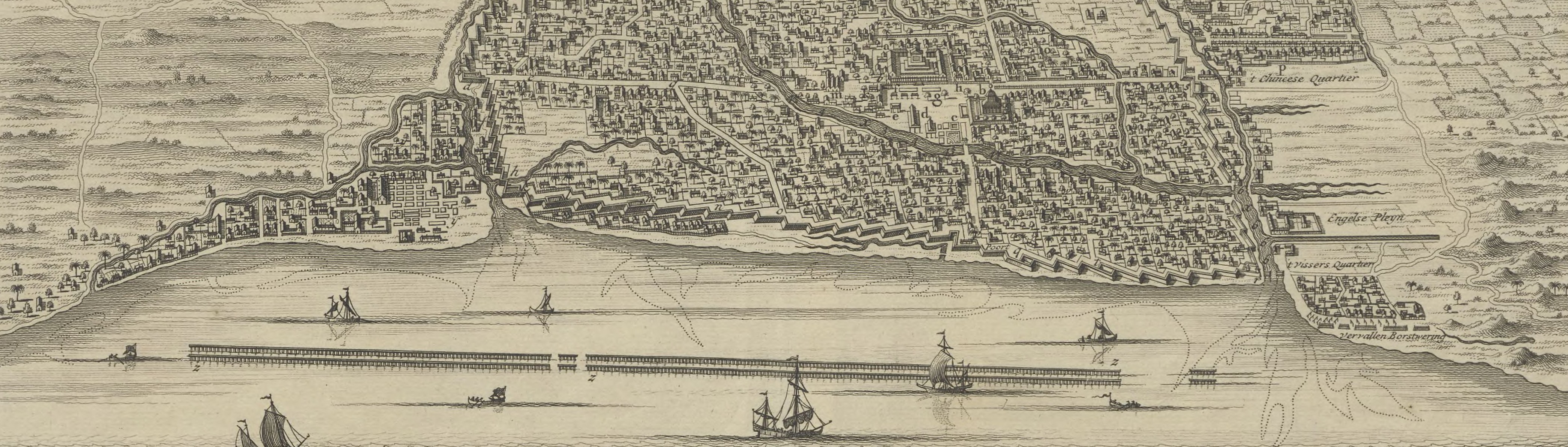
The illustration is taken from the Blaeu-Van der Hem Atlas. The original illustration dates from 1624 and was copied between 1665-1668, probably in Johannes Vingboons' studio.